This is an interactive map! Use controls to pan and zoom this map.
- Favourite
-
Please login to use this tool.
No account yet? Register first; it's free!
|
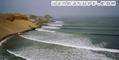
This wave is the next point up from the main point at Chicama, about another 800m further round the Cape from the main Chicama point takeoff area. Locals call it 'Keys', and it starts just next to an old wall which goes down to the sea-you will see a very long clean left if there is a big swell running.
A very long walk from town (about 30 minutes) or hire a taxi cab for about 10 bucks and walk down from the ricketty dirt track, from just near the old mining wall which you will see going down to the sea. You can also walk around from the main point takeoff area about another 10 minutes.
English (Translate this text in English): This wave is the next point up from the main point at Chicama, about another 800m further round the Cape from the main Chicama point takeoff area. Locals call it 'Keys', and it starts just next to an old wall which goes down to the sea-you will see a very long clean left if there is a big swell running.
A very long walk from town (about 30 minutes) or hire a taxi cab for about 10 bucks and walk down from the ricketty dirt track, from just near the old mining wall which you will see going down to the sea. You can also walk around from the main point takeoff area about another 10 minutes.
English (Translate this text in English): This wave is the next point up from the main point at Chicama, about another 800m further round the Cape from the main Chicama point takeoff area. Locals call it 'Keys', and it starts just next to an old wall which goes down to the sea-you will see a very long clean left if there is a big swell running.
A very long walk from town (about 30 minutes) or hire a taxi cab for about 10 bucks and walk down from the ricketty dirt track, from just near the old mining wall which you will see going down to the sea. You can also walk around from the main point takeoff area about another 10 minutes.
English (Translate this text in English): This wave is the next point up from the main point at Chicama, about another 800m further round the Cape from the main Chicama point takeoff area. Locals call it 'Keys', and it starts just next to an old wall which goes down to the sea-you will see a very long clean left if there is a big swell running.
A very long walk from town (about 30 minutes) or hire a taxi cab for about 10 bucks and walk down from the ricketty dirt track, from just near the old mining wall which you will see going down to the sea. You can also walk around from the main point takeoff area about another 10 minutes.
|
|
Like the main Chicama point, it needs a bit of swell to get going, but it will be a foot or two bigger than Chicama. And like Chicama, it definitely gets better the bigger it gets, getting world class once it hits a solid 4-8 feet, when the main point will be firing at 3-6+. Bigger than this (up to 10 feet a few times a year) the locals say it gets dangerous, as it doesn't break all that far from the rocks. It really needs to be at least 4 feet+ to be good, otherwise its too slow. But if you hit it at 4-6 feet, mid to high tide?, you won't forget it, you can get an incredibly long, fast ride up to 600m and with a clean hollow wall and always howling offshore wind all the way, with the odd barrel section.
It can be an excellent wave, but again, it does need a bigger swell to show its true form.
It peaks just next to a small black jutting outcrop, and walls up into a big clean face, then backs off a little, before running fast up to another 600m towards the main point, dying out towards the end. Most surfers don't paddle back as its way too long, but paddle across to the main point another few hundred metres.
English (Translate this text in English): Like the main Chicama point, it needs a bit of swell to get going, but it will be a foot or two bigger than Chicama. And like Chicama, it definitely gets better the bigger it gets, getting world class once it hits a solid 4-8 feet, when the main point will be firing at 3-6+. Bigger than this (up to 10 feet a few times a year) the locals say it gets dangerous, as it doesn't break all that far from the rocks. It really needs to be at least 4 feet+ to be good, otherwise its too slow. But if you hit it at 4-6 feet, mid to high tide?, you won't forget it, you can get an incredibly long, fast ride up to 600m and with a clean hollow wall and always howling offshore wind all the way, with the odd barrel section.
It can be an excellent wave, but again, it does need a bigger swell to show its true form.
It peaks just next to a small black jutting outcrop, and walls up into a big clean face, then backs off a little, before running fast up to another 600m towards the main point, dying out towards the end. Most surfers don't paddle back as its way too long, but paddle across to the main point another few hundred metres.
English (Translate this text in English): Like the main Chicama point, it needs a bit of swell to get going, but it will be a foot or two bigger than Chicama. And like Chicama, it definitely gets better the bigger it gets, getting world class once it hits a solid 4-8 feet, when the main point will be firing at 3-6+. Bigger than this (up to 10 feet a few times a year) the locals say it gets dangerous, as it doesn't break all that far from the rocks. It really needs to be at least 4 feet+ to be good, otherwise its too slow. But if you hit it at 4-6 feet, mid to high tide?, you won't forget it, you can get an incredibly long, fast ride up to 600m and with a clean hollow wall and always howling offshore wind all the way, with the odd barrel section.
It can be an excellent wave, but again, it does need a bigger swell to show its true form.
It peaks just next to a small black jutting outcrop, and walls up into a big clean face, then backs off a little, before running fast up to another 600m towards the main point, dying out towards the end. Most surfers don't paddle back as its way too long, but paddle across to the main point another few hundred metres.
English (Translate this text in English): Like the main Chicama point, it needs a bit of swell to get going, but it will be a foot or two bigger than Chicama. And like Chicama, it definitely gets better the bigger it gets, getting world class once it hits a solid 4-8 feet, when the main point will be firing at 3-6+. Bigger than this (up to 10 feet a few times a year) the locals say it gets dangerous, as it doesn't break all that far from the rocks. It really needs to be at least 4 feet+ to be good, otherwise its too slow. But if you hit it at 4-6 feet, mid to high tide?, you won't forget it, you can get an incredibly long, fast ride up to 600m and with a clean hollow wall and always howling offshore wind all the way, with the odd barrel section.
It can be an excellent wave, but again, it does need a bigger swell to show its true form.
It peaks just next to a small black jutting outcrop, and walls up into a big clean face, then backs off a little, before running fast up to another 600m towards the main point, dying out towards the end. Most surfers don't paddle back as its way too long, but paddle across to the main point another few hundred metres.
On its day its world class (Rip Curl have a photo of it in their 'Search' series), very long, and needs a bigger 4-6+ foot swell. Some of my best, uncrowded waves in Peru here.
English (Translate this text in English): On its day its world class (Rip Curl have a photo of it in their 'Search' series), very long, and needs a bigger 4-6+ foot swell. Some of my best, uncrowded waves in Peru here.
English (Translate this text in English): On its day its world class (Rip Curl have a photo of it in their 'Search' series), very long, and needs a bigger 4-6+ foot swell. Some of my best, uncrowded waves in Peru here.
English (Translate this text in English): On its day its world class (Rip Curl have a photo of it in their 'Search' series), very long, and needs a bigger 4-6+ foot swell. Some of my best, uncrowded waves in Peru here.
Good wave on bigger days, that is also less crowded than the main point.
English (Translate this text in English): Good wave on bigger days, that is also less crowded than the main point.
English (Translate this text in English): Good wave on bigger days, that is also less crowded than the main point.
English (Translate this text in English): Good wave on bigger days, that is also less crowded than the main point.
 Comments
Please login to use this tool.
No account yet? Register first; it's free!
Show all (0)...
Be the first to comment this country
Errors, Feedback
You can edit this page to correct errors or add new information. If you have any problems regarding this page, Send us feedback.
 English
 Español
 Français
 Português


 Keys
Keys